Canva, AI tagging, and capricious social harm
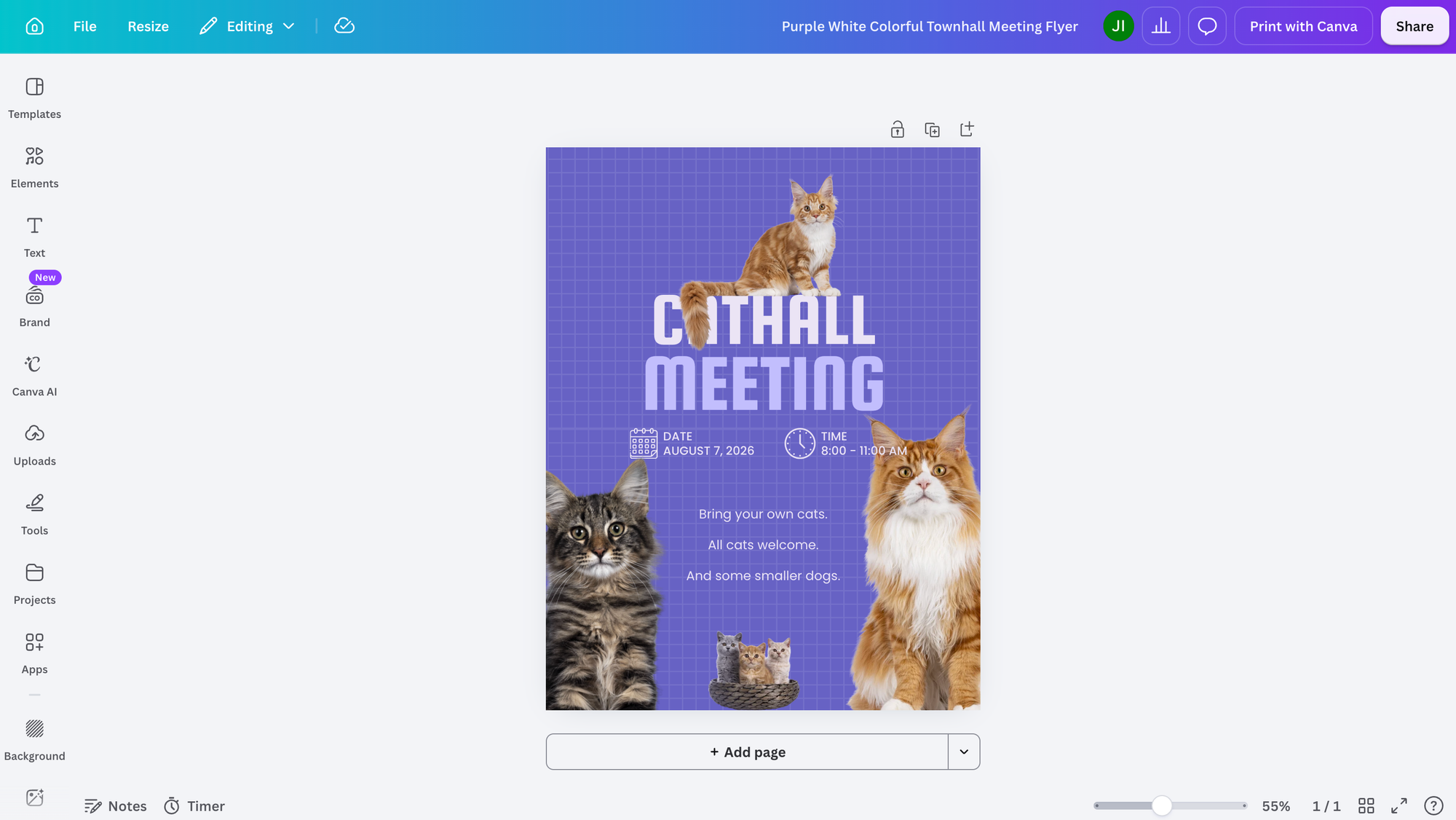
Let’s talk about Canva.
Canva is an online graphics design platform, targeted mostly toward individuals and small business owners. It’s been around for a long time; it launched in 2013. And it’s popular. Today, it boasts over 250 million monthly active users. That’s huge.
Recently, Canva hit socials because Meta started tagging a lot of images created with it as AI-generated. Including images that people really didn’t think should be marked as AI-generated. It turns out that while everyone wants AI-generated content to be clearly marked, they don’t necessarily want their content to be marked.
So, is Canva AI? Is using Canva bad?
Let’s dive in.
What is Canva used for?
In another life, I owned a game shop. From Adventurer’s League to Warhammer 40k, we were constantly running events. And since we were on a shoestring budget, I made my own flyers.
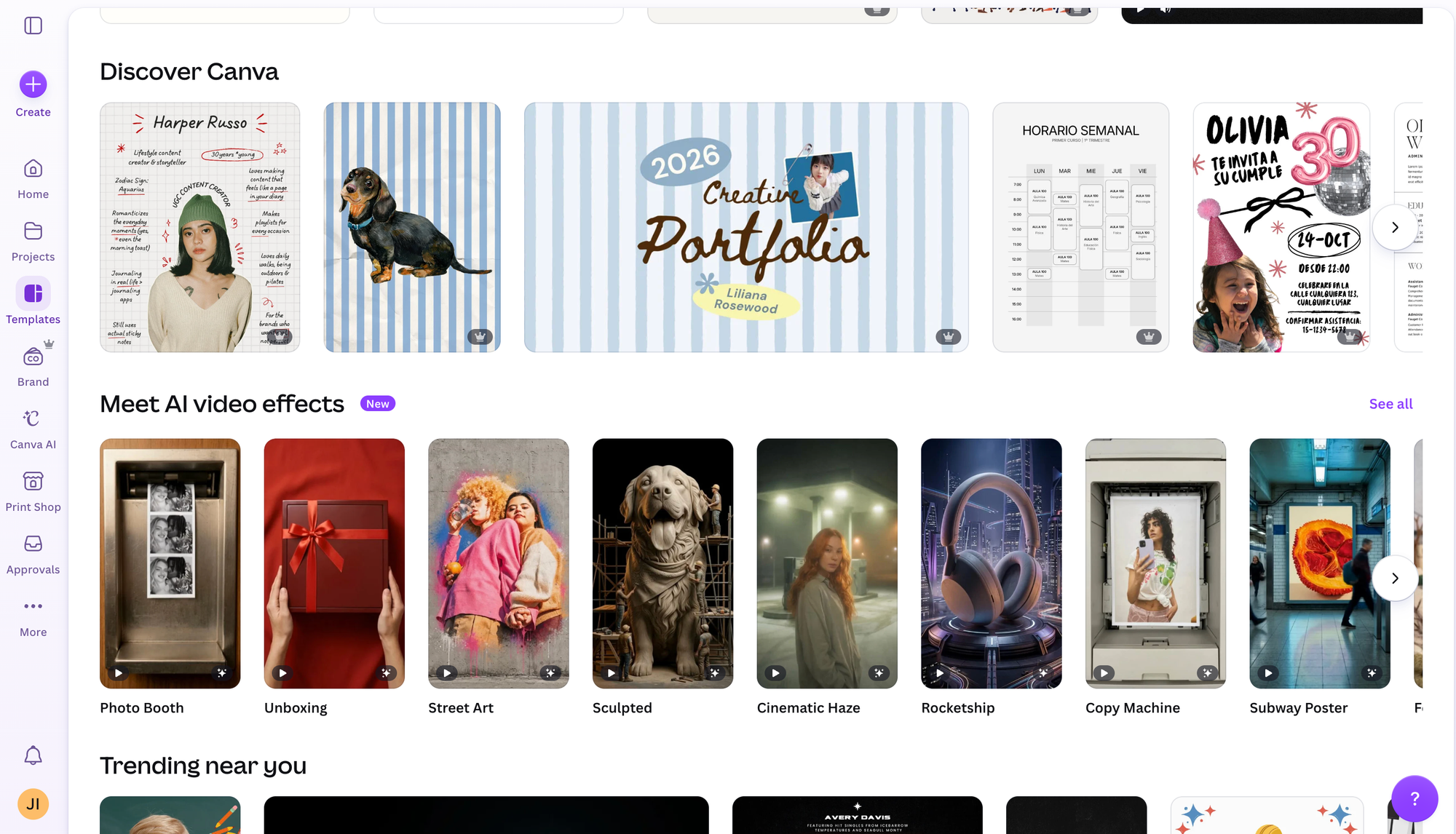
In Canva, you can select templates, or you can create things from scratch. I usually just used a premade template. There wasn’t a lot of creativity to it. Making a flyer took about 15 to 20 minutes. They weren’t perfect, but they existed. And I used Canva for a lot of other things: social media thumbnails, business cards, etc.
But you know what’s interesting is that 15 to 20 minutes of work on my Macbook Pro is about the same amount of energy it would take to AI generate four or five flyers. One-off AI generation has actually gotten really efficient. And because Canva is software-as-a-service — hosted on the cloud — you can’t even really make the argument that I wasn’t using a data center.
Now, I wouldn’t have AI-generated a flyer back then. And I wouldn’t do it now. But it’s mostly because I wouldn’t want to spend hours arguing with people online.
So, even absent GenAI features, Canva is and was still about the equivalent of just AI generating something.
AI by any other name
So, earlier this month, Canva users were consternated to discover that simply removing a background from an image was adding an AI tag to their work when they uploaded it to Meta platforms. And partly this is because there’s become this general public misunderstanding of what the “harmful” or “bad” AI is.
Largely, people have decided that generative AI is the “bad AI” and that all other AI is the “good AI” or the “assistive AI.” It’s not pedantry to point out that these are meaningless distinctions. And before I go on, I must explain: this is not a defense of AI. There are problems with the AI industry. That is undeniable. It would be incredibly disingenuous to claim otherwise.
This is a defense of what words mean.
Because here’s what people consider bad AI—or what they call generative AI:
- AI that uses data centers.
- AI that generates stolen creative works.
- AI that replaces jobs.
Let’s break this down.
- Data centers: Many things use data centers. Canva has always used data centers because it’s a software-as-a-service application. AI systems are using the same data centers as services like Netflix; in fact, using Netflix is pretty comparable to using ChatGPT today in terms of environmental load. Although again, I don’t want to be disingenuous here; this is usage and training is far more inefficient.
The only data center that is purely evil is a data center that is being used for mass surveillance. We learned that from Batman. And those do exist, and they need to be eradicated. - Stolen creative works: This is a misunderstanding of what generative technology is. But it’s not a surprising misunderstanding. People were introduced to AI through an LLM, a large language model, that was basically just a plagiarism engine. But generative AI technology merely takes existing data and uses it to create predictive data sets.
Critically, that data doesn’t have to be a creative work; it doesn’t have to be a poem or a painting. It can be, for instance, a mammogram or historic weather patterns. Conversely, you don’t need generative AI to produce a plagiaristic work. Generative AI can be trained on any data set, whether it’s receipts from a retail store or public domain imagery.
And the same underlying generative AI technology that drives LLMs is the same technology being used for cancer research and vaccines. - Jobs: Al also doesn’t have to be generative to take jobs. Just automation takes jobs. In the case of Canva, AI is taking the place of a job that has never functionally existed, in the sense that virtually no one using Canva for flyers or social media ads would have hired a separate person to produce these things. They’re either using it for their job as a graphics designer, or they are using it to fulfill a task that would otherwise be unpaid.
A background removal service that uses generative AI, for example, is less efficient than a deterministic algorithm might be, but it doesn’t carry any of the moral burden that people expect it to.
It’s not tearing down the rainforest, it’s not replacing jobs, and it’s not plagiarizing a long history of background removal artists.
But… is Canva’s background remover even AI?
It is AI. And that's why it's being tagged as being AI. But it’s not necessarily generative AI.
(And it’s not assistive AI, because that term is utterly meaningless. I can’t emphasize enough that using the term “assistive AI” is the fastest way to know that someone has zero idea of what they’re talking about. All “assistive AI” means is “generative AI that I myself am comfortable using.” It’s not a real distinction.)
The background tool itself is non-generative AI. But, Canva does have GenAI features and, even more complicated, its GenAI features can be used for background removal. For example, you can ask Canva to “remove a background” and the generative AI LLM will call the tool needed to remove that background.
And you can ask it to AI generate a background and the system will likely use its background removal tool in conjunction with its magic background features. Because Canva is a platform with generative AI features, unpacking generative AI from the features used is more or less impossible.
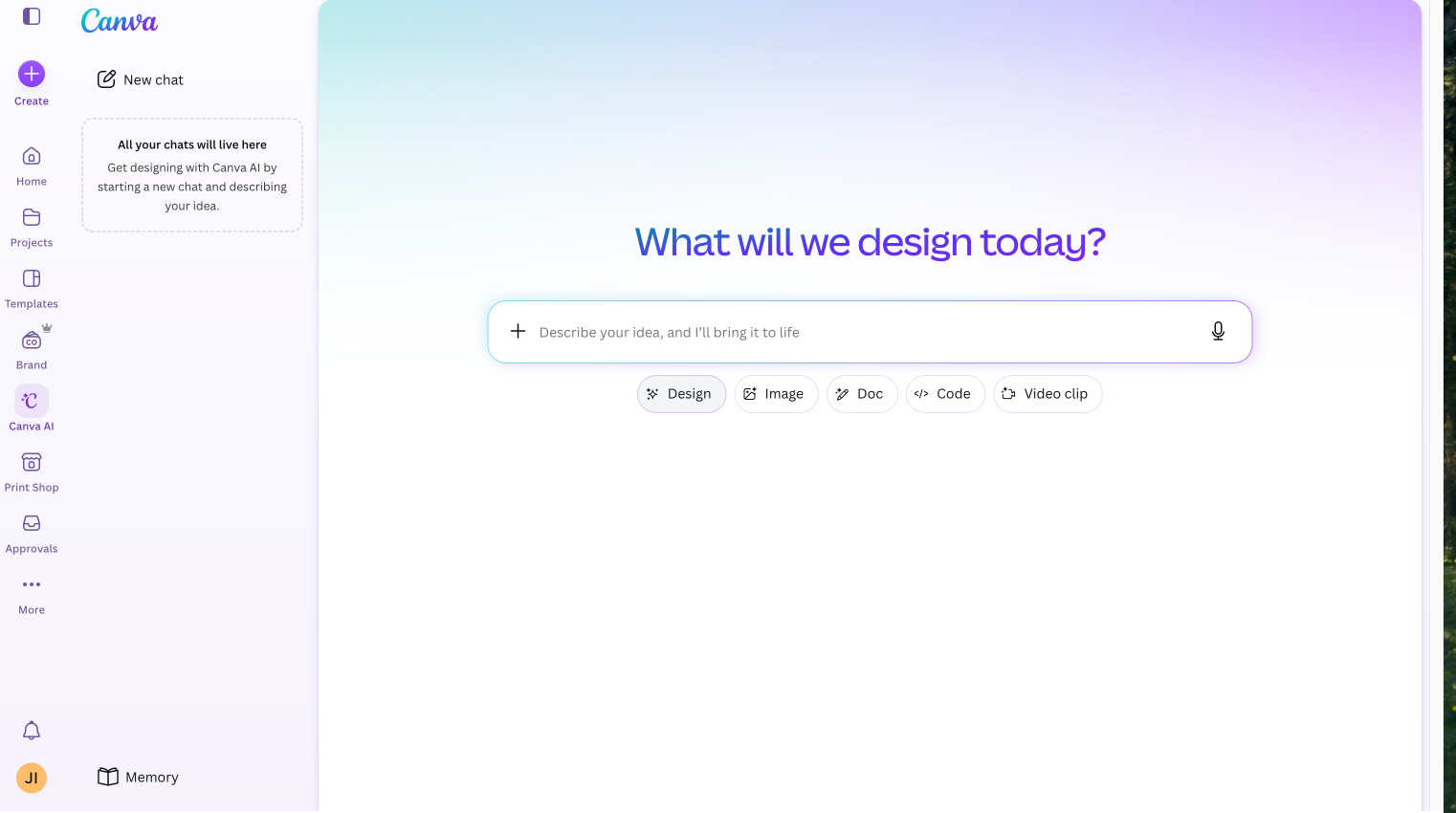
And that’s likely part of why these images are being tagged as AI; either it's been touched by AI or not. This isn't a moral distinction on a technical backend, just a technical distinction from the real world.
The question, then, becomes—what is the harm? Is there harm? Should we not use Canva? Should we scrawl our flyers in crayon in a relentless pursuit of authenticity?
And I don’t know, maybe; it depends on your goals.
I can say with certainty that such a choice would be almost entirely performative. But I’m not the type of person who believes performance is necessarily bad. If we want to create a hard line against any and all generative AI, then yeah, we can boycott Canva, and we can handmake flyers in MS Paint. Because pretty much all other suites also use GenAI.
But the reality is that in the broad scope of harm that AI can do, creating a flyer or a social media thumbnail is… nothing. The actual harms of AI are unfathomably deep. LLM technology can create a world in which all the information we see is controlled by three companies. Surveillance technology can create precrime and arrest us for things that we never did. Deepfakes can create evidence to keep us jailed. There are innumerable dark and very real harms of unregulated AI technology… creating flyers for an event just isn’t one of those things.
And tagging or watermarking images that use AI in production… is pretty much a pure good.
The true cost of stochastic moralism
Let me tell you a brief little story. I had a friend who was boycotting a fast food chain… and it’s not one that you’d expect. It was a popular chain in the area, the reasons he had were a bit nebulous, but I respected it. And he talked about it pretty much every time food came up. So for years, we never went to that chain. I even ran interference to make sure that it wasn’t inadvertently selected by the broader group.
Then one day, I went to his house and he was eating from that fast food chain. And I was like dude, what the hell. And he was like yeah, I only do it like, once a month tops.
The people who are loudest about certain proscriptions tend to be the ones not following them at all. And that’s kind of where it becomes dangerous, because we can easily find ourselves Pied Pipered into stances that, quite frankly, no one really has.
I’ve seen a lot of people say that Canva is for amateurs. That no one really uses it. No one serious uses it. Everyone uses Photoshop. But… it has 250 million users, approximately 50 million of which are paid users. That’s not trivial.
Similarly, many of my writing friends tell me: No one uses Grammarly. Grammarly is trash. I have used Grammarly, and I do agree that it is trash, but it also has 40 million active users.
The way we talk about these tools and the consequences of using them has become significantly divergent from reality. And what that does is it creates this strange environment where the people who care most are the ones who are recklessly and adversely impacted.
Does it serve us when an independent author feels that she can’t launch her book because she can’t afford a cover and has been told that Canva is evil? We can tell this independent author all day long that she can use MS Paint, but realistically, her books aren’t going to sell. Meanwhile, a wealthy influencer will simply get published by a vanity press that uses Adobe Photoshop, which provides the same generative AI features.
And no one will care. They won’t. Because no one really understands the technology, why they’re angry, and what it’s all for.
I know what the dispute here will be. “We do know. We know why we’re mad.” But those are the three things we discussed: environmental harm, creative works, and job replacement. At the end of the day, a Canva generative AI feature does none of these things; it doesn’t harm the environment any more than any other digital application, and it isn’t replacing a job. And in terms of creative works or copyright infringements, it’s trained on its own owned internal library, similar to Adobe.
Our lives are now filled with complexity. It’s hard, as humans, to tell whether we are doing right or wrong. And we desperately want to create these narrow bands of truth to guide us. The average person is not going to understand generative AI. The average person will not understand the difference between Magic Background or an open-source foreground isolation Python library. But we don’t have to.
What we need to do is be less judgmental of individuals. Because it’s not the end user who is driving environmental harm or creative replacement. It’s billionaires and their companies. We can reserve our wrath, when properly targeted, toward the companies that are actually causing the harm.
Because when we judge individuals, three things happen.
- One, we unleash and vent our rage on the people who are least likely to be able to exact change. We foment a non-collaborative, friction-filled atmosphere from which no real change can emerge.
- Two, we tend to act with bias. Marginalized people will always be targeted more because more is expected of them. A disabled author or a female author is going to be held to far more rigid and unyielding standards because “they should know better.”
- Finally, we just don’t get what we want. Meta started marking AI content. That’s what everyone wanted it to do. And then people got mad because they realized they were using AI tooling all along—and they could no longer be precious about it.
We are now using AI, and generative AI, a lot more than we think we are. It’s in our laptops, it’s in our phones. We can’t keep witch-hunting and policing each other; it’s not fruitful.
And when it comes to overwhelmingly harmless services like Canva, the choice whether to use it is a personal one.
 Start
Start